Published
CA Practice Management
Best Workflow Management Practices for CA Firms
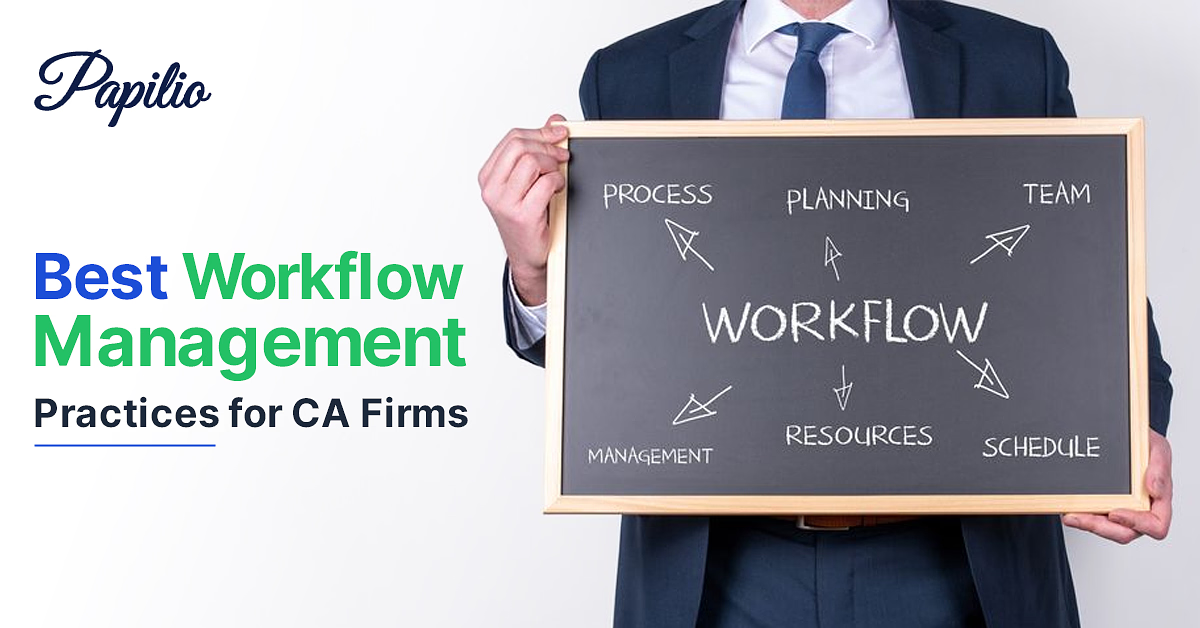
Effective workflow management is essential for CA firms handling recurring compliance deadlines, audits, tax filings, and client engagements. As firms grow, managing tasks through spreadsheets and emails often leads to missed deadlines, limited visibility, and operational inefficiencies. A structured workflow system helps standardize processes, improve accountability, streamline task execution, and maintain compliance. By adopting modern workflow management software for CAs, firms can gain real-time visibility into work progress, automate routine activities, and deliver consistent client service. This article outlines proven best practices for building an efficient and scalable workflow management framework.
What Is Workflow Management in a CA Firm?
Workflow management refers to the systematic planning, execution, monitoring, and optimization of work processes within a CA practice.
In practical terms, it involves defining how work moves from one stage to another, who is responsible at each stage, what deadlines apply, and how progress is monitored.
Examples include:
- Income tax return preparation workflows
- GST compliance workflows
- Audit engagement workflows
- Client onboarding processes
- Statutory filing workflows
- Internal review and approval processes
Effective CA firm workflow management ensures that every task follows a predefined path rather than depending on individual memory or manual follow-ups.
For example, a tax filing engagement may move through the following stages:
- Document collection
- Data verification
- Return preparation
- Senior review
- Client approval
- Filing
- Final documentation
A structured workflow ensures no stage is skipped, and accountability remains clear throughout the engagement lifecycle.
Why Effective Workflow Management Matters for CA Firms
Accounting firms operate in an environment where accuracy, timeliness, and regulatory compliance are non-negotiable.
Poor workflow management can lead to:
- Missed statutory deadlines
- Increased rework
- Team bottlenecks
- Client dissatisfaction
- Compliance risks
- Revenue leakage
By implementing strong accounting workflow management practices, firms can achieve significant operational improvements.
- Improved Deadline Compliance: Structured workflows provide visibility into approaching deadlines and pending tasks, reducing the risk of missed filings and penalties.
- Better Resource Utilization: Managers can identify team workloads and allocate resources more effectively across engagements.
- Reduced Operational Risk: Standardized processes reduce dependence on individual employees and help maintain service consistency.
- Enhanced Client Experience: Clients receive timely updates, faster turnaround times, and more predictable service delivery.
- Greater Scalability: Firms can handle increasing client volumes without proportionally increasing administrative overhead.
Best Workflow Management Practices for CA Firms
Here are some of the best workflow management practices for CA firms:
Standardize Recurring Processes
One of the most common operational challenges in CA firms is process inconsistency. Different team members often execute the same task differently, creating variations in quality, turnaround time, and compliance.
The solution is to establish standardized workflows for recurring services such as:
- Income tax filings
- GST returns
- Statutory audits
- Payroll processing
- Client onboarding
- ROC compliance
Documenting process steps creates consistency across the firm and reduces dependency on individual experience.
Standard operating procedures (SOPs) should define task sequence, require documentation, approval stages, review requirements and complteiton criteria. Standardization is a foundational element of successful workflow management for CA firms.
Centralize Task Assignment and Tracking
Many firms still rely on email chains, spreadsheets, or messaging applications to manage assignments.
This often results in:
- Duplicate work
- Lost tasks
- Delayed responses
- Lack of accountability
Using dedicated task management software for chartered accountants enables centralized visibility into all assignments.
Every task should have:
- A designated owner
- Due date
- Priority level
- Status indicator
- Associated client record
Managers should be able to quickly answer questions such as:
- What work is pending?
- Who is responsible?
- What is overdue?
- What requires escalation?
Centralized task management creates transparency across the organization and improves operational control.
Set Clear Deadlines and Priorities
Not all tasks carry the same urgency or business impact. Firms should classify work according to:
- Regulatory deadlines
- Client commitments
- Revenue impact
- Complexity
- Strategic importance
For example:
High Priority
- Tax filing deadlines
- Audit report submissions
- Regulatory compliance activities
Medium Priority
- Advisory deliverables
- Client reviews
Low Priority
- Internal documentation updates
- Administrative tasks
Establishing priority levels helps teams focus on critical deliverables while reducing last-minute workload spikes. Modern workflow management software for CAs can automatically trigger reminders and escalation alerts when deadlines approach.
Automate Routine Workflow Activities
Manual administration consumes a significant portion of professional time in many accounting firms. Common examples include:
- Task creation
- Reminder emails
- Status updates
- Approval requests
- Follow-up notifications
Automation can eliminate repetitive activities while improving process consistency.
Examples include:
- Automatic assignment of GST filing tasks each month
- Reminder notifications before compliance deadlines
- Escalation alerts for overdue reviews
- Workflow triggers after document submission
- Automated client communication updates
By reducing manual intervention, firms can redirect professional resources toward higher-value advisory and client service activities. Automation is one of the most impactful components of modern CA firm workflow management.
Establish Accountability at Every Stage
Accountability gaps are a common source of workflow failures. When responsibility is unclear, tasks often remain incomplete or delayed. Every workflow stage should include:
- Task owner
- Reviewer
- Approver (where applicable)
- Completion timeline
For example:
| Workflow Stage | Responsible Person |
|---|---|
| Data Collection | Executive |
| Return Preparation | Associate |
| Review | Senior CA |
| Approval | Partner |
| Filing | Compliance Team |
Clearly assigned ownership reduces confusion and improves execution quality. The most effective firms create accountability through transparent tracking rather than frequent manual follow-ups.
Maintain Centralized Client and Document Records
A major challenge in accounting firms is locating client information spread across multiple systems, folders, emails, and individual devices. Centralized document management helps maintain workflow continuity.
Key records should include:
- Engagement letters
- Financial statements
- Tax documents
- Audit working papers
- Client communications
- Compliance records
Benefits include:
- Faster document retrieval
- Reduced duplication
- Better compliance controls
- Improved collaboration
When documents are integrated with workflow systems, teams can access required information directly within the engagement process. This significantly improves the effectiveness of accounting workflow management.
Track Workflow Performance Using KPIs
Workflow optimization requires measurable performance indicators. Without data, firms cannot identify inefficiencies or improvement opportunities. Useful workflow KPIs include:
- Turnaround Time: Average time required to complete a service engagement.
- On-Time Completion Rate: Percentage of tasks completed before deadline.
- Workflow Bottleneck Frequency: Number of delays occurring at specific stages.
- Staff Utilization Rate: Percentage of productive billable hours.
- Rework Percentage: Frequency of corrections or revisions.
- Client Response Time: Average time taken to respond to client requests.
Regular KPI monitoring enables data-driven operational decisions and continuous process improvement.
Common Workflow Management Challenges in CA Firms
Even firms with established processes often encounter workflow challenges.
- Dependency on Key Individuals: Critical knowledge residing with specific employees creates operational risk.
- Lack of Visibility: Managers cannot easily determine task status or workload distribution.
- Manual Tracking Systems: Spreadsheets become difficult to maintain as client volume grows.
- Missed Deadlines: Without automated reminders and tracking, compliance obligations may be overlooked.
- Fragmented Information: Documents, communications, and tasks stored in separate systems create inefficiencies.
- Inefficient Resource Allocation: Managers struggle to balance workloads across teams.
Addressing these challenges typically requires a combination of process standardization and specialized workflow technology.
How Papilio Helps CA Firms Streamline Workflow Management
Papilio is designed specifically to address the operational requirements of professional accounting and CA firms. Rather than relying on disconnected tools, firms can manage engagements, tasks, deadlines, documents, and team collaboration from a unified platform.
Key capabilities include:
- Workflow Automation: Automate recurring compliance and accounting processes while reducing manual effort.
- Task Management: Assign, monitor, and track work across teams using dedicated task management software for chartered accountants.
- Deadline Tracking: Monitor statutory due dates, engagement milestones, and compliance obligations in real time.
- Centralized Client Information: Maintain client records, documents, and communications within a single system.
- Performance Monitoring: Track productivity metrics and workflow KPIs to identify improvement opportunities.
- Team Collaboration: Improve coordination between associates, managers, partners, and support staff.
By combining process visibility with automation, Papilio supports efficient and scalable workflow management for CA firms.
Conclusion
Effective workflow management is no longer optional for modern CA firms. As client expectations rise and compliance requirements become more complex, firms need structured processes that provide visibility, accountability, and operational consistency.
Successful CA firm workflow management begins with standardizing recurring processes, centralizing task tracking, automating routine activities, and measuring performance through meaningful KPIs.
When supported by purpose-built workflow management software for CAs, firms can reduce operational risk, improve productivity, enhance client service quality, and create a scalable foundation for long-term growth.
The firms that invest in workflow excellence today are better positioned to manage increasing workloads, maintain compliance standards, and deliver consistent value to their clients.
Frequently asked questions
Common questions about workflow management in CA firms, including best practices, benefits, and the features to look for in workflow management software.
What is workflow management in a CA firm?
Workflow management in a CA firm is the process of organizing, assigning, tracking, and monitoring tasks throughout client engagements and compliance activities. It ensures work follows predefined processes, deadlines are met, and accountability is maintained across all stages of service delivery.
Why is workflow management important for chartered accountants?
Workflow management helps chartered accountants improve deadline compliance, reduce operational errors, enhance team coordination, maintain service consistency, and increase productivity. It also provides better visibility into workloads and client engagements.
What are the best workflow management practices for CA firms?
Key best practices include standardizing recurring processes, centralizing task tracking, setting clear priorities, automating routine activities, establishing accountability, maintaining centralized document records, and monitoring workflow performance through KPIs.
How can workflow management software improve productivity in accounting firms?
Workflow management software for CAs automates repetitive tasks, improves visibility into workloads, tracks deadlines, centralizes information, and reduces manual follow-ups. This allows accounting professionals to spend more time on client service and advisory activities.
What features should CA firms look for in workflow management software?
CA firms should look for workflow automation, task assignment and tracking, deadline management, document management, client record centralization, reporting dashboards, KPI tracking, team collaboration tools, and customizable workflow templates tailored to accounting and compliance processes.