Published
CA Practice Management
How to Create Efficient Workflows for GST, TDS and Income Tax Compliance
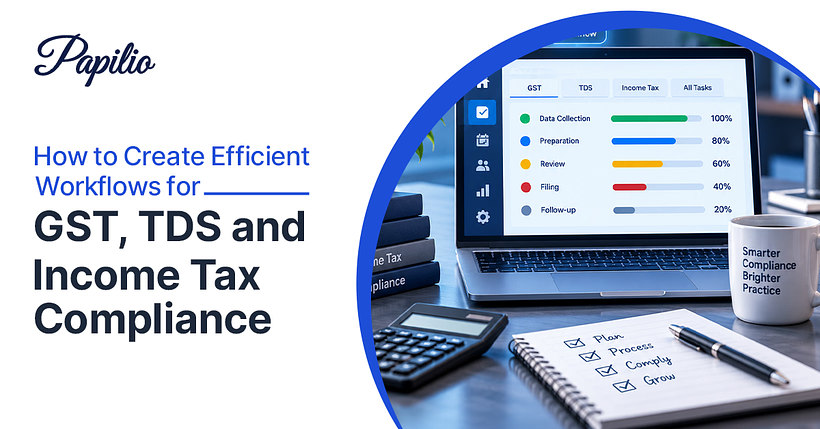
For a CA firm, tax compliance is rarely a single task. It involves collecting documents, checking data, reconciling information, preparing returns, completing reviews, following up with clients and filing within applicable deadlines. When these activities are managed across multiple clients, even a small delay can create a larger workflow bottleneck.
A well-defined tax compliance workflow for CA firms gives every assignment a clear path from document collection to filing. It helps teams see what needs to be done, who owns it, what is pending and what needs review before the deadline.
What Is a Tax Compliance Workflow for CA Firms?
A tax compliance workflow is a structured process for managing recurring tax-related work from document collection to filing and record maintenance. It connects the client, compliance requirement, deadlines, required information, task ownership and review stages in one process.
Instead of depending on spreadsheets, emails and individual reminders, a firm can use a standardized workflow to ensure that every compliance assignment follows a defined process.
Why CA Firms Need an Efficient Tax Compliance Workflow
As the number of clients and recurring assignments increases, manually coordinating deadlines, documents and team members becomes difficult. A structured workflow gives firms better control over three key areas: deadlines, information and accountability.
It allows teams to see what is due, what is waiting for client information, who is responsible for the next action and which assignments are awaiting review. This reduces repeated follow-ups, last-minute work and the risk of tasks being overlooked.
How to Create an Efficient GST, TDS and Income Tax Compliance Workflow
Create a Centralized Compliance Calendar
Maintain one calendar for recurring GST, TDS and income tax deadlines, organized by client, compliance type and responsible team member.
More importantly, work backwards from the statutory deadline. Set an internal filing and review deadline first, then work backwards to preparation and document-collection deadlines. This creates a buffer for missing information, corrections and approvals.
Standardize Compliance Checklists
Create workflow templates for recurring GST, TDS and income tax assignments. Each template should define the required documents, preparation steps, review requirements and filing activities.
For example, a GST workflow template can define the required data, reconciliation checks, review steps and filing requirements in the order they need to be completed. Templates can then be adapted to each client's requirements instead of making every team member create a process from scratch.
Assign Tasks and Set Deadlines
Every task should have a clear owner and deadline. Larger assignments can be divided into stages such as document collection, preparation, review and filing.
Clear ownership ensures that every assignment has a defined next action and does not get lost between team members.
Add Review and Approval Stages
Build review checkpoints into the workflow before filing. For complex or higher-risk assignments, firms can follow a maker-checker approach, where one person prepares the return and another reviews it before filing.
The workflow should record both preparation and review completion so that an assignment does not move to filing without the required approval.
Track Compliance Status
A clear status flow can be:
Documents required → In Progress → Client Clarification → Under Review → Ready to File → Filed → Completed
The status should indicate the actual position of the task and the next action required. This gives partners and managers visibility into bottlenecks without checking individual assignments.
Set Up Automated Reminders and Follow-Ups
Automated reminders can alert team members about upcoming deadlines and trigger follow-ups when client information is overdue. Firms can also define escalation rules, such as moving an unresolved client request to a senior team member after a specified number of follow-ups.
Build an Exception and Escalation Process
Not every assignment will move from one stage to the next without issues. Define what happens when documents are missing, data does not reconcile, a client does not respond or a reviewer raises an issue. Set clear escalation rules so unresolved items reach the right person instead of remaining stuck.
GST Compliance Workflow for CA Firms
A practical GST compliance workflow should cover more than return preparation. It can follow this sequence:
Client data collection → Document verification → Exception resolution → Return preparation → Review → Final client confirmation, where applicable → Filing → Record maintenance
The reconciliation stage is particularly important because mismatches or missing information may need to be resolved before the return is finalized. The workflow should therefore make exceptions visible and assign responsibility for resolving them.
TDS Compliance Workflow for CA Firms
A TDS compliance workflow should cover the activities involved from deduction through reporting and record maintenance:
Transaction or payroll data → TDS applicability and deduction → TDS payment/deposit → Statement preparation → Review → Filing → Record maintenance
Separating these stages helps firms track whether an assignment is waiting for source data, payment-related action, statement preparation or review, instead of treating the entire TDS process as one task.
Income Tax Compliance Workflow for CA Firms
Income tax compliance can involve different documentation, computations and review requirements depending on the client's profile and the nature of the return.
A typical workflow can follow:
Document collection → Data verification → Computation → Review → Client queries → Final approval → Return filing → Record maintenance
The workflow should be adapted to the client's profile. Individuals, businesses, companies and cases involving audit or additional reporting requirements may require different documents, checks and approval stages.
How to Automate Tax Compliance Workflows
Automation is most useful for predictable administrative activities. CA firms can automate:
- Recurring task creation and deadline reminders: Ensure routine assignments are created and tracked on time.
- Client document requests and follow-ups: Reduce manual chasing for pending information.
- Task assignments and status updates: Keep responsibilities and progress visible.
- Overdue escalations and review notifications: Bring delayed work to the right person's attention.
Exception handling, complex decisions and final reviews should remain with qualified team members.
Common Tax Compliance Workflow Challenges Faced by CA Firms
CA firms typically face three major workflow challenges.
Deadline management: Multiple clients and compliance requirements make it difficult to keep every internal and statutory deadline visible.
Information management: Missing or incorrect client documents can delay preparation and create repeated follow-ups.
Team visibility: Without clear ownership and status tracking, managers may not know which assignments are delayed, pending client action or creating an uneven workload across the team.
A standardized workflow addresses these issues by giving every recurring assignment a defined process and next action.
Best Practices for Managing Recurring Tax Compliance Tasks
CA firms can improve recurring compliance management by following a few core practices:
- Standardize recurring workflows so similar assignments follow a consistent process.
- Set internal deadlines ahead of statutory due dates to create room for review and corrections.
- Define ownership and review responsibility so every assignment has a clear person responsible for completion and approval.
- Track client information separately so pending documents do not get hidden within active assignments.
- Automate repetitive reminders and recurring tasks to reduce manual coordination.
- Review workflow performance periodically and identify recurring delays, bottlenecks and overdue tasks.
How CA Practice Management Software Can Streamline Tax Compliance
CA practice management software can bring compliance tasks, deadlines, documents, team assignments and workflow statuses into one system.
Instead of maintaining separate spreadsheets or manually checking emails, firms can create recurring tasks, assign responsibilities, monitor progress and identify pending work from a centralized platform. Managers can also get better visibility into team workload and reallocate work when necessary.
A digital workflow can provide an activity trail showing task ownership, document movement, reviews and completion. This makes it easier to understand the entire progression and delays if any.
How Papilio Helps CA Firms Manage Tax Compliance Workflows
Managing tax compliance becomes easier when recurring work, deadlines and team responsibilities are organized in one place. Papilio helps CA firms bring structure to their compliance processes, giving teams better visibility into ongoing assignments and the ones that need attention.
Instead of managing compliance activities through disconnected spreadsheets, emails and manual follow-ups, firms can use a centralized workflow to organize recurring work, assign responsibilities and track progress across clients. This makes it easier to see what is pending, what is in progress and what needs review or action.
Papilio can also help firms create a more consistent approach to recurring GST, TDS and income tax work. By following defined processes for each type of assignment, teams can reduce dependency on individual working styles and maintain greater consistency as the firm handles more clients.
For partners and managers, better workflow visibility can make it easier to identify pending work, monitor team activity and address bottlenecks before they affect deadlines. For team members, it provides greater clarity on their responsibilities and the next action required.
The result is a more organized approach to tax compliance with less time spent coordinating routine work and more time focused on completing client assignments accurately and on time.
Conclusion
An efficient tax compliance workflow for CA firms helps bring consistency to recurring work, improve visibility across clients and teams, and keep compliance deadlines under control. By standardizing processes and automating routine follow-ups, firms can reduce manual coordination and avoid unnecessary last-minute pressure.
With the right workflow in place, GST, TDS and income tax compliance become easier to manage at scale, helping teams work more efficiently while keeping client assignments on track.
Frequently asked questions
Common questions about building GST, TDS and income tax compliance workflows in CA firms, including automation, deadline tracking, document follow-ups, and practice management software.
How can CA firms manage GST, TDS and income tax compliance efficiently?
CA firms can manage recurring compliance more efficiently by using standardized workflows, internal deadlines, document tracking, clear task ownership, review stages and automated reminders. This creates a consistent process across clients and helps teams identify delays early.
What should a tax compliance workflow for a CA firm include?
A workflow should include statutory and internal deadlines, required information, task ownership, preparation and review stages, filing status, client follow-ups and an escalation process for delayed or blocked assignments.
How can CA firms track GST compliance tasks for multiple clients?
A centralized workflow can organize GST assignments by client, deadline, assigned employee and status. This allows managers to quickly identify returns that are pending, under review, awaiting client information or ready for filing.
How can tax compliance workflows reduce missed deadlines?
Workflows combine statutory deadlines with earlier internal deadlines, clear ownership and automated reminders. This gives teams time to resolve missing information, corrections or review issues before the final filing deadline.
How can CA firms automate recurring compliance tasks?
Firms can use practice management software to automate recurring task creation, deadline reminders, client document requests, follow-ups, status notifications and overdue escalations.
What are the benefits of using workflow automation for CA firms?
Workflow automation reduces repetitive coordination, improves visibility into ongoing work, creates greater process consistency and helps teams manage a growing volume of recurring compliance assignments.
How can CA firms track pending client documents for tax compliance?
Firms can use document checklists that show whether information has been requested, received, verified or requires clarification. This makes pending client actions easier to identify and follow up.
Can CA practice management software help manage GST and TDS compliance?
Yes. Practice management software can help firms organize GST and TDS tasks, deadlines, document requirements, assignments, reviews, follow-ups and filing-related activities within a centralized workflow.
How can CA firms track employee workload for compliance tasks?
A centralized task management system can show assignments, pending work, deadlines and workload by employee. Managers can use this visibility to identify overloaded team members and distribute work more effectively.
What is the best way to manage recurring tax compliance work in a CA firm?
The best approach is to combine standardized workflow templates, internal deadlines, clear ownership, document tracking, review stages, exception handling and automation for repetitive coordination.