Published
CA Practice Management
How to Build a Lead Management Process for a CA Firm
Why CA Firms Need a Lead Management Process
Generating enquiries is only the first step towards winning clients for a Chartered Accountancy firm. Referrals, website forms and phone calls can be missed when records are scattered, follow-ups depend on memory or responsibility is unclear.
A structured process assigns each enquiry an owner, next action and outcome, helping partners identify suitable prospects and lost opportunities.
What Is Lead Management for CA Firms?
Lead management for CA firms is the process of capturing, qualifying, tracking and following up with prospective clients until an engagement is confirmed or closed. Lead tracking for accounting firms records the required service, source, decision timeline, communication history and next action alongside contact details, without treating prospects as active clients before an engagement is agreed.
Common Sources of Leads for Chartered Accountants
Referrals from existing clients and professional contacts can introduce prospects with an initial level of trust. Website enquiries, Google Business Profile interactions and search-driven calls reach businesses seeking audit, taxation, GST, accounting or advisory services. LinkedIn, webinars and industry events can also generate opportunities.
Record the source and retain it after conversion. Comparing qualified leads and clients by source shows which channels generate business.
How to Build a Lead Management Process for a CA Firm
An effective CA firm lead management process—and a consistent lead tracking process for accountants—defines what to record, who owns each enquiry and what must happen before a lead advances.
1. Capture the enquiry. Record the prospect’s name, business, contact details, date, source and requested service. Add relevant details such as business type, deadline and expected scope when available; do not collect sensitive documents prematurely.
2. Assign an owner. Give every enquiry one accountable team member and an initial-response deadline. Others may contribute, but the owner ensures the next action happens and the record stays current.
3. Qualify the requirement. Confirm the service, urgency, decision-maker, approximate scope and delivery capacity. Route the enquiry to the relevant team and flag independence or conflict concerns before committing to work.
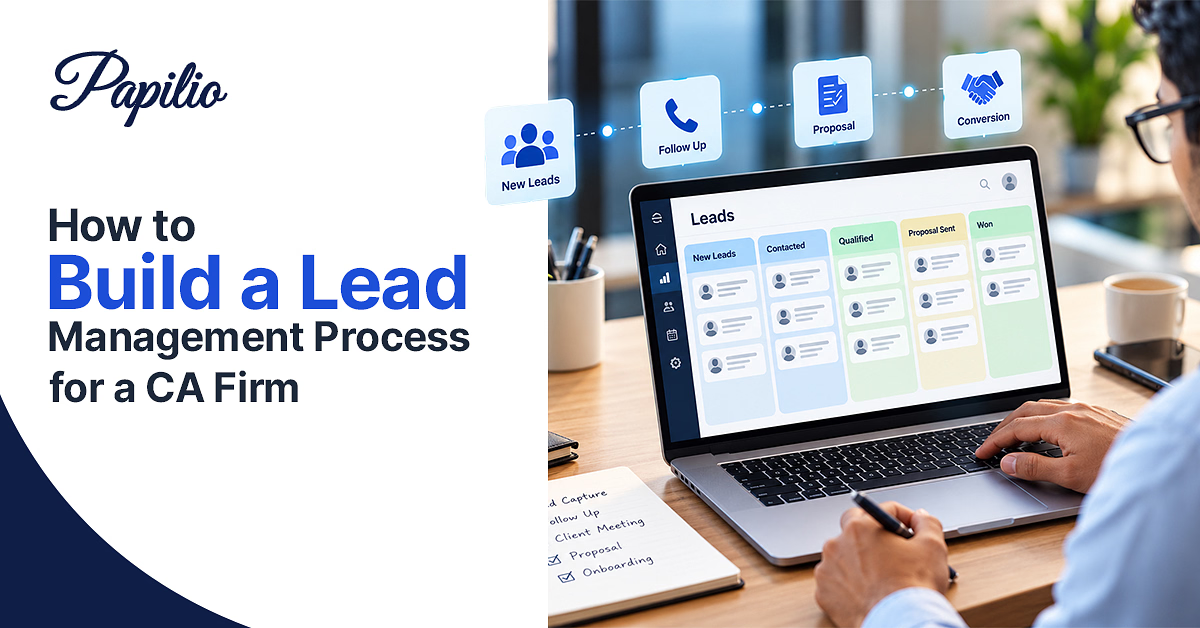
4. Define pipeline stages. Use New, Contacted, Qualified, Proposal Sent, Decision Pending, Won, Lost and Nurture. Set entry rules; a lead is Qualified only when its requirement is understood, the firm can potentially serve it and a concrete next step exists.
5. Record the outcome. Track proposed scope, fee, proposal date and expected decision date. On acceptance, transfer agreed details into onboarding and complete engagement-acceptance procedures. If the prospect declines or stops responding, record why and close or nurture the lead under firm policy.
How to Qualify and Prioritise Leads for CA Services
Qualification determines whether an enquiry is suitable; prioritisation determines which suitable opportunity needs attention first. Assess service fit, urgency, decision-maker access, commercial viability and readiness to proceed.
Score each factor from zero to two, for a maximum of ten. A clear requirement, realistic deadline, decision-maker access, viable scope and timely responses may earn eight to ten points. A low score should prompt clarification or nurturing, not automatic rejection.
Scores guide workload allocation, not acceptance. Assess independence, risk, competence and capacity before accepting any engagement.
How to Create a Lead Follow-Up System
Set a response standard, such as acknowledging enquiries within one working day. Arrange a discussion, then confirm proposal receipt and answer questions about scope, deliverables or fees.
Every active lead needs a dated next action. Schedule contact around the prospect’s decision timeline, not through repeated generic messages. Review overdue actions weekly. After reasonable unsuccessful attempts, move the lead to Nurture or Lost under firm policy and record the reason and any agreed future contact.
Lead Management Spreadsheet vs. CRM Software for CA Firms
A spreadsheet may suit a firm with modest enquiry volumes, a simple process and one person maintaining records. Track source, service, owner, stage, last contact, next action, due date and outcome in a controlled shared file with consistent field definitions.
CRM for CA firms becomes more useful when several people manage leads, handovers are frequent, reminders are missed or partners need pipeline reports. Lead management software for accountants can centralise communications, assign tasks, automate reminders and compare conversions by service and source.
Choose based on workflow. Assess security, permissions, reporting, ease of use and onboarding integration. A CRM is worth considering when manual coordination and reporting cost more time than the system requires. Define the process first; software cannot fix unclear ownership or inconsistent stages.
Key Metrics to Measure Lead Management Performance
Track enquiry volume by source, first-response time, qualification rate, proposal-to-client conversion, overall lead-to-client conversion and average time to conversion. Record lost reasons, including pricing, service mismatch, delayed decisions and capacity.
Review results monthly by service and source. High enquiry volume but low qualification may indicate poor targeting; weak proposal conversion may point to unclear scope, fees or follow-up. Test an improvement and compare results over time.
Common Lead Management Mistakes CA Firms Should Avoid
Common failures include relying on memory, unclear ownership, inconsistent stage definitions, proposals without follow-up dates and deleted lost-lead records. Duplicate entries and notes in personal accounts also undermine handovers.
Prevent these problems with required fields, consistent stage rules and regular record reviews. Restrict access appropriately, collect only necessary enquiry information and use approved secure channels for client documents.
Lead Management Checklist for CA Firms
Document enquiry fields, stage definitions, qualification criteria, response standards and closure rules. Confirm every lead has an owner and each active opportunity has a dated next action. Review overdue actions weekly, reconcile won leads with onboarding and examine conversion metrics monthly.
Conclusion: Build a Repeatable Lead Management Process
A repeatable process moves enquiries towards confirmed engagements. Start with a shared register, qualification rules and accountable follow-ups; then assess whether CRM automation can reduce administration and improve reporting.
Frequently asked questions
Common questions about managing leads in CA firms, including tracking enquiries, follow-ups, CRM software, and lead management metrics.
What is the best way to manage leads for a CA firm?
Use a central register or CRM to record enquiries, assign owners, qualify service requirements and track next actions until prospects convert, enter nurture or close.
How can Chartered Accountants track client enquiries?
Record each enquiry’s source, contact details, service requirement, stage, owner, last interaction and next follow-up date in a shared spreadsheet or CRM with appropriate access controls.
What is the difference between lead management and CRM?
Lead management is the process of capturing, qualifying and converting prospects. CRM software supports it by organising lead records, communications, tasks and reports, and can also manage ongoing client relationships.
How often should CA firms follow up with leads?
Acknowledge enquiries promptly, ideally within one working day as an internal target. Schedule subsequent contact around the prospect’s questions and decision timeline, avoiding repeated messages without a relevant reason.
Can CRM software help CA firms convert more leads?
CRM software can reduce missed follow-ups, preserve communication histories and reveal pipeline bottlenecks. Improved conversion depends on accurate records, clear ownership, suitable qualification criteria and consistent team adoption.
Which metrics should a CA firm track for lead management?
Track lead source, response time, qualification rate, proposal conversion, overall lead-to-client conversion, time to conversion and reasons for lost opportunities. Review results by service and source to identify improvements.